
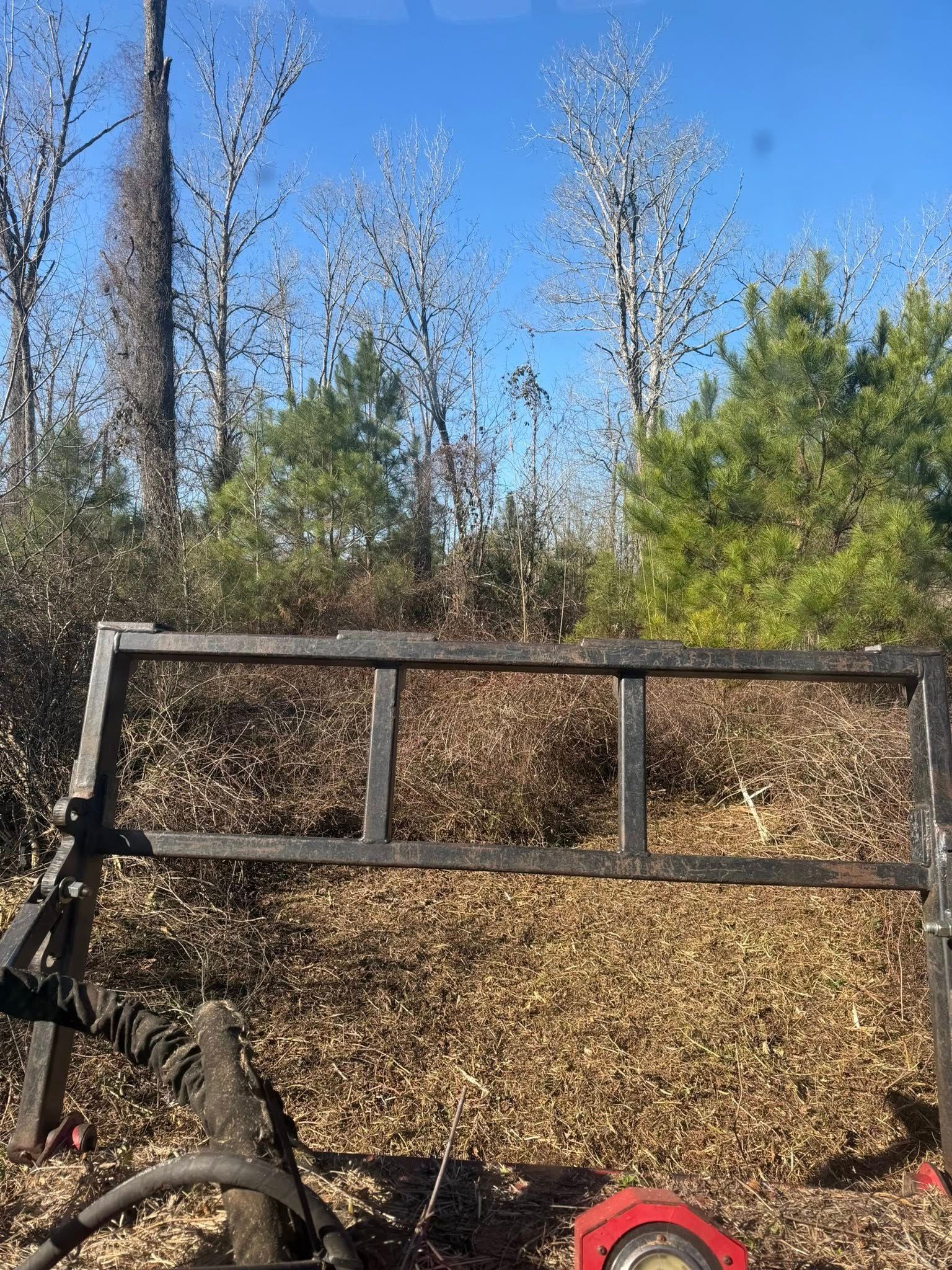
Clear Dense Brush Without Hauling or Burning
Forestry Mulching in Hamilton, Mississippi for overgrown acreage blocking access and land use
BH Landworx LLC provides forestry mulching services across Hamilton, Mississippi and surrounding areas when your property has become choked with brush, saplings, and dense vegetation that prevents you from using the land the way you need to. You need a method that clears the growth, leaves the ground intact, and does not require burning permits or hauling truckloads of debris off the property.
Forestry mulching grinds brush, small trees, and undergrowth directly on site, turning them into a layer of natural mulch that stays on the ground. This process eliminates the need to pile, haul, or burn what is removed. The mulch layer helps hold the soil in place, reduces erosion on slopes, and breaks down over time to add organic matter back into the ground. The work is done with specialized equipment that moves across the property, processing vegetation as it goes, leaving clear ground behind without disturbing the root structure or topsoil beneath.
If you are preparing hunting land, opening up pasture, or planning development on acreage that has grown over, reach out to discuss what needs clearing and how the site should look when the work is done.
How the Clearing Process Protects Soil and Saves Time
You avoid the delay and expense of coordinating debris removal because the mulching head processes everything in place. The machine cuts through undergrowth and grinds it into chips that settle evenly across the ground, creating a protective layer that reduces weed growth and helps the soil retain moisture during dry periods. On properties with uneven terrain or areas prone to washout, this mulch layer acts as a stabilizer while you decide what comes next.
After the job is complete, you will see open ground where dense thickets once stood, with clear sight lines and room to move equipment or vehicles. The mulch left behind will mat down naturally over the following weeks and will not need to be raked or removed. BH Landworx LLC completes each project by ensuring vegetation is processed to the desired height and that access routes are opened as planned.
The service works best on brush, saplings, and trees up to a certain diameter, typically under eight inches depending on the density and type of growth. Larger hardwoods or stumps from previous clearing may require additional equipment or methods. The mulching process does not remove roots, so regrowth is possible if follow-up maintenance is not planned.
What to Know Before Scheduling Forestry Mulching
Property owners often ask how the work will affect the land after completion, what size trees can be handled, and whether the mulch needs to be cleared away once the job is done.
What types of vegetation can forestry mulching handle?
The equipment processes brush, vines, saplings, and small trees, typically up to six or eight inches in diameter depending on wood density and site conditions.
How does the mulch layer affect the ground after clearing?
The mulch settles into a mat that suppresses weeds, holds moisture, and breaks down slowly without needing removal, leaving the soil structure intact underneath.
When is forestry mulching a better choice than traditional clearing?
You should choose mulching when you want to avoid hauling debris, preserve topsoil, and leave the site ready for the next phase without burning or grading.
Why does the service not include stump removal?
The mulching head grinds above-ground growth but does not extract roots or large stumps, which require different equipment such as an excavator or stump grinder.
How long does it take to clear an acre of overgrown land in Hamilton, Mississippi?
Time depends on vegetation density and terrain, but most residential acreage can be cleared in one to three days with consistent machine operation.
When your property has grown beyond walking through comfortably or when you need to prepare land for planting, fencing, or building, contact BH Landworx LLC to schedule a site visit and discuss the scope of clearing required.